
 Catégorie
 by George May 01,2025
Le milieu des années 80 a marqué une ère d'or pour Marvel Comics, à la fois de manière créative et financière. Ayant surmonté les luttes financières de la fin des années 1970, en grande partie grâce au succès de Star Wars , Marvel était sur le point de révolutionner l'industrie de la bande dessinée avec le lancement de Secret Wars en 1984. Cet événement a eu des effets profonds sur l'univers Marvel et l'industrie plus large, inaugurant les nouvelles directions narratives pour ses héros et méchants qui résonneraient pendant des années.
Au cours de cette période, plusieurs autres histoires historiques ont émergé, notamment l'arc né de Frank Miller à Daredevil, le retour de Jean Gray à X-Factor, et la saga Surtur de Walt Simonson à Thor, entre autres. Dans cet épisode, la partie 8 de notre série, nous nous plongeons dans ces histoires charnières et autres développements importants du même calendrier. Rejoignez-nous alors que nous explorons les problèmes essentiels de Marvel Comics de cette époque vibrante.
Parmi les récits les plus célèbres de cette période, Born de Frank Miller se démarque de nouveau . De retour pour écrire Daredevil après sa course initiale révolutionnaire, Miller, avec l'artiste David Mazzuchelli, a conçu un arc inoubliable à Daredevil # 227-233. L'histoire commence par Karen Page, dans les affres de la dépendance, vendant l'identité secrète de Daredevil pour l'héroïne, qui tombe finalement entre les mains de la cheville ouvrière. Il utilise ces informations pour démanteler systématiquement la vie de Matt Murdock, le laissant sans abri et sans-abri. Ce n'est que par l'intervention de sa mère, une religieuse nommée Maggie, que Matt commence son voyage ardu pour devenir Daredevil. Le récit explore la lente résurgence de Matt et la descente de la cheville ouvrière dans l'obsession, culminant dans un chef-d'œuvre qui présente l'homme sans crainte. Cette histoire a inspiré la saison 3 de Daredevil de Netflix et sert de base au titre de la série Disney + Revival Daredevil: Born de nouveau .
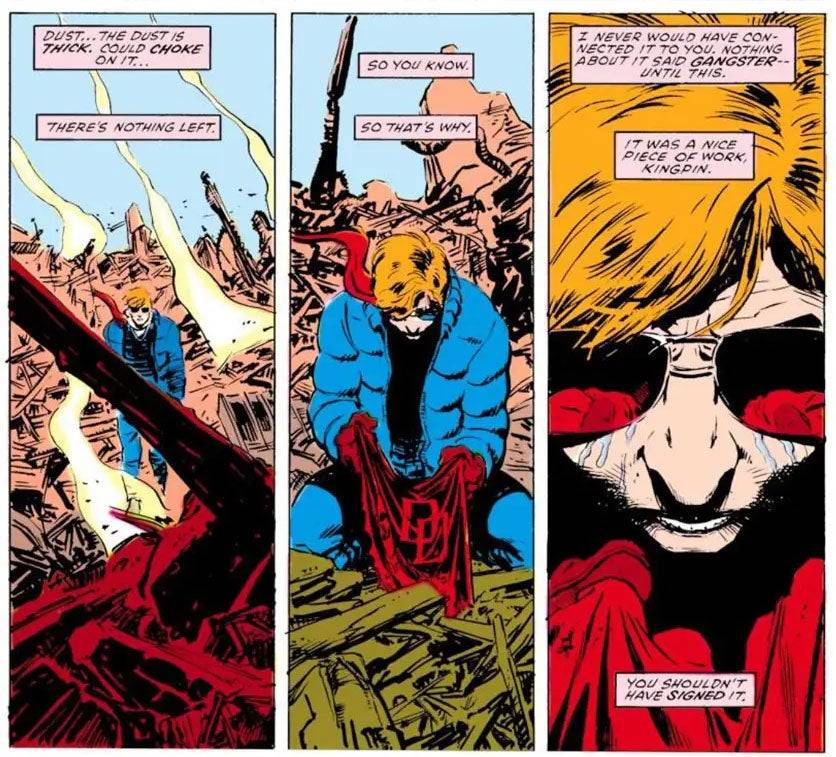 Daredevil: né de nouveau
Simultanément, Walt Simonson a apporté une nouvelle dimension à Thor avec sa course à partir de 1983, introduisant Beta Ray Bill dans Thor # 337, un extraterrestre digne de manier Mjolnir. Le travail de Simonson a infusé le récit de Thor avec un fantasme riche et mythique, aboutissant à la saga épique Surtur de # 340-353. Cette saga suit la quête du Fire Demon Surtur pour provoquer Ragnarok en utilisant l'épée crépusculaire, envoyant Malekith les axés pour combattre Thor. Le point culminant voit Thor, Loki et Odin se sont unis contre Surtur dans une bataille qui influencerait les adaptations ultérieures comme Thor: The Dark World et Thor: Ragnarok.
Comme discuté dans la partie 4 de notre série, la guerre des Avengers / Defenders de 1973 préfigurait la montée des croisements d'événements. Cette tendance se matérialise entièrement avec la sortie de Secret Wars en 1984, une mini-série en 12 parties conçue par le rédacteur en chef de l'époque, Jim Shooter, avec l'art de Mike Zeck et Bob Layton. Originaire d'un partenariat marketing avec Mattel, l'histoire voit le Beyonder transporter de nombreux héros et méchants Marvel à Battleworld pour déterminer la supériorité du bien ou du mal à travers le combat. Bien que la série soit réputée pour ses grandes conséquences de la distribution et de l'univers, elle manque souvent de profondeur dans le développement du caractère, en particulier avec les X-Men et le couple inhabituel de Magneto et de la guêpe.
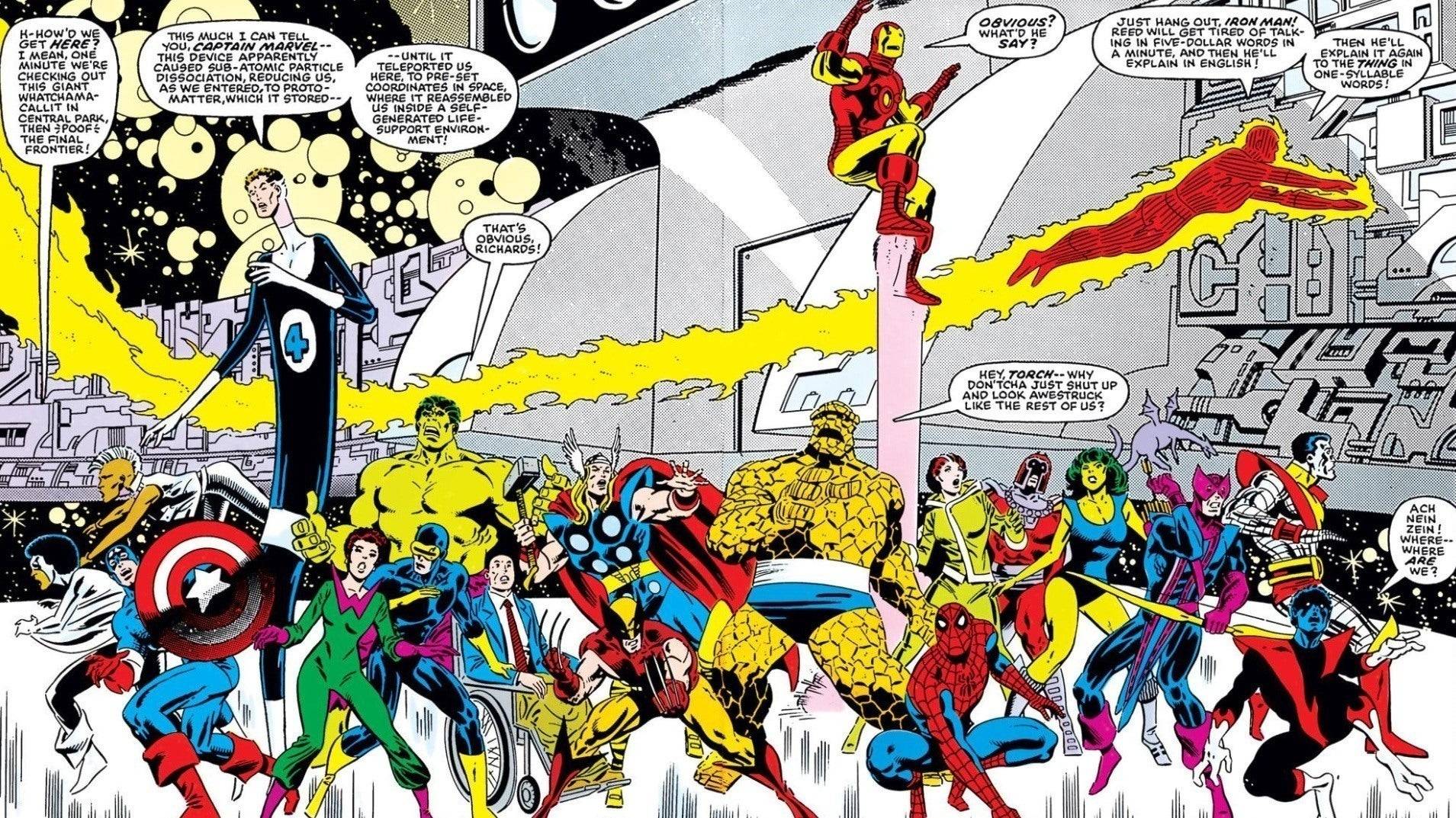 Secret Wars # 1
Malgré ses défauts narratifs, Secret Wars a eu un impact significatif sur l'industrie de la bande dessinée, conduisant à une suite, Secret Wars II , et parallèlement à la crise de DC sur Infinite Earths, il a établi le modèle d'événement comme un aliment de base dans l'édition de bandes dessinées. La version 2015 de Secret Wars de Jonathan Hickman et Esad Ribić a fourni une exploration plus cohérente et satisfaisante du concept.
Après le travail fondamental de Stan Lee et Gerry Conway, Roger Stern a revitalisé Amazing Spider-Man avec sa course à partir du numéro 224. Son mandat a présenté le Hobgoblin dans # 238, un nouvel adversaire formidable pour Spider-Man. Bien que le scénario original de Stern ait été interrompu par les interférences éditoriales, il a ensuite résolu l'identité du méchant dans la mini-série 1997 Spider-Man: Hobgoblin Lives.
Dans Amazing Spider-Man # 252, Stern a également présenté le costume de Symbiote Black Symbiote de Spider-Man, qui a fait ses débuts dans Secret Wars # 8 . Ce costume a déclenché une intrigue secondaire importante conduisant à l'émergence de l'un des méchants les plus emblématiques de Spider-Man. La Symbiote Saga a été adaptée à plusieurs reprises dans divers médias , notamment Spider-Man 3 et Insomniac's Spider-Man. Daredevil.
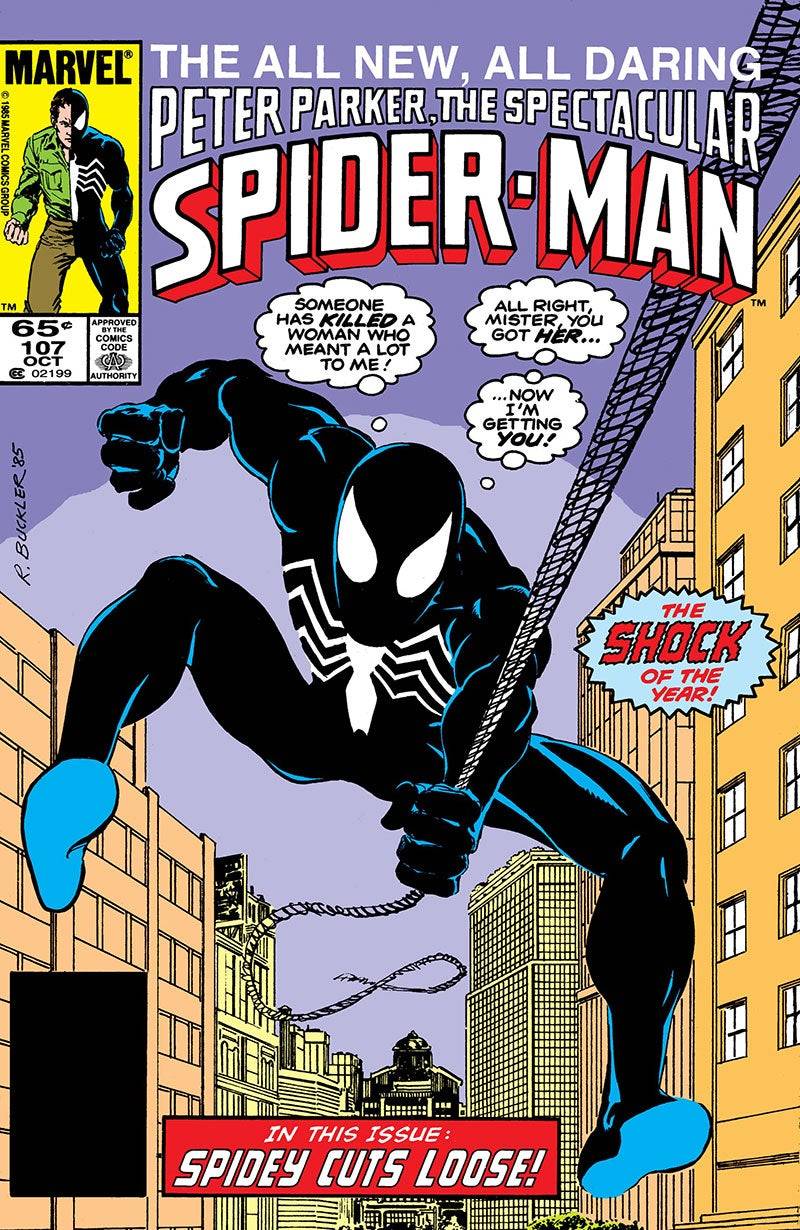 SPECTACULAIRE SPIDER-MAN # 107
Le milieu des années 80 était également une période de développements importants pour les mutants de Marvel. Vision and the Scarlet Witch # 4 a confirmé Magneto en tant que père de Quicksilver et Scarlet Witch, un point de complot qui a duré jusqu'à un retcon 2015. X-Men # 171 a vu Rogue passer des côtés de la confrérie des mutants maléfiques aux X-Men, cimentant son statut d'héroïne bien-aimée. De même, X-Men # 200 a présenté le procès de Magneto et le leadership ultérieur de l'école de Xavier, un récit adapté dans X-Men '97.
Les histoires mutantes les plus charnières de la période étaient la résurrection de Jean Gray et l'introduction de l'apocalypse. Jean est revenu dans une histoire en deux parties à travers Avengers # 263 et Fantastic Four # 286, sans souvenir de son temps en tant que Phoenix. Cette intrigue, conçue par le futur écrivain Kurt Busiek, a conduit à sa réunissement avec les X-Men originaux pour former X-Factor. Dans X-Factor # 5-6, Louise Simonson et Jackson Guice ont introduit Apocalypse, un ancien mutant de la technologie céleste, qui est devenu un antagoniste central de X-Factor et un aliment de base dans les médias X-Men, y compris le film X-Men 2016: Apocalypse.
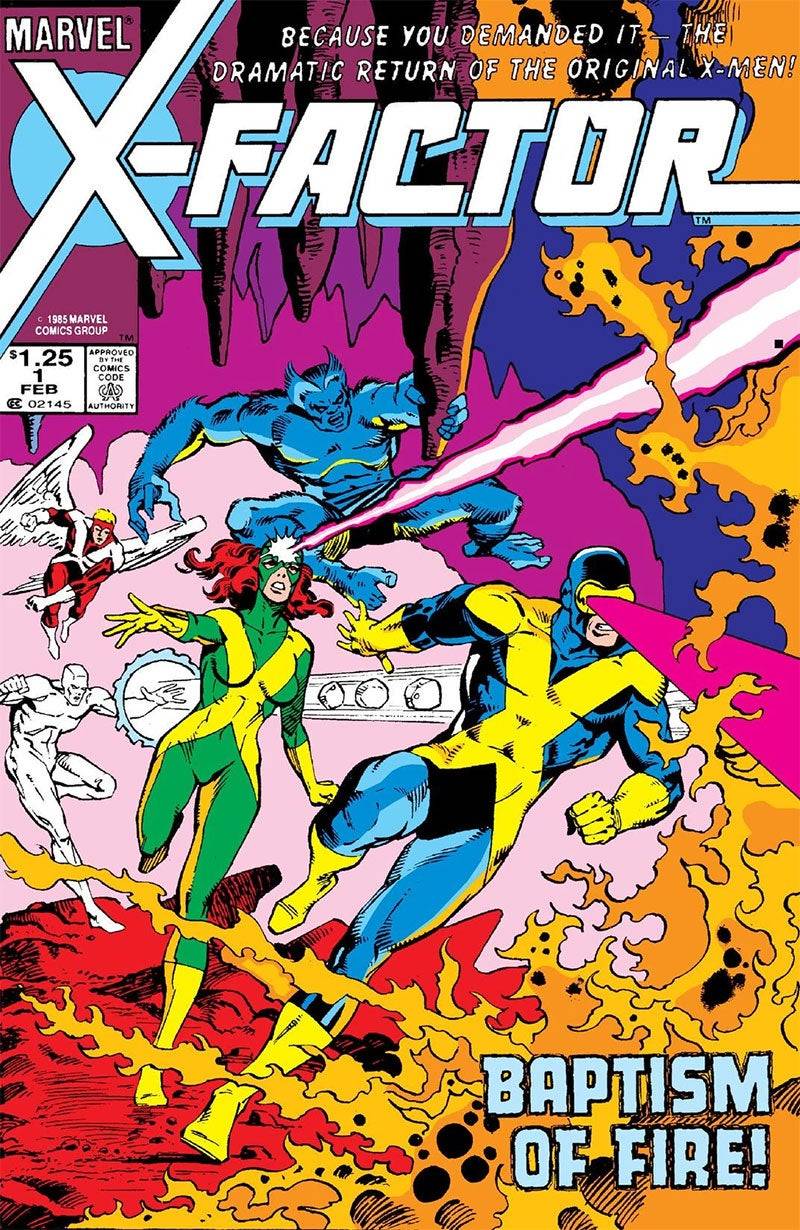 X-Factor # 1
Zenless Zone Zero Mise à jour des fuites de fuite de cycle à la cadence future du contenu
Simulateur de contrefaçon de banque : solution de frappe pour les crises économiques
Tous les matériaux, kits et constellations Mavuika dans Genshin Impact
Marvel Rivals : Saison 1, Dracula expliqué
Albion Online lance la mise à jour Paths to Glory avec du nouveau contenu, des taux d'apparition améliorés et bien plus encore
Roblox: codes Auras RNG Auras (janvier 2025)
Meilleurs Xbox Game Pass jeux pour enfants (janvier 2025)
Mise à niveau en solo : le tournoi mondial approche

Twisted Memoies
Télécharger
he Seeds of Seduction: The Stepmother
Télécharger
Modern Command Mayhem
Télécharger
Spider Rope Action Game
Télécharger
Learning 123 Numbers For Kids
Télécharger
Katapat
Télécharger
Filipino Hyatt peso Casino
Télécharger
It’s Just A Game
Télécharger
Squad Alpha - tir d'action
Télécharger
Monster Hunter Wilds: Pre-Hunt Cooking Guide (For New Hunters) Welcome, Hunter! Before you charge into the wilds, mastering the art of cooking can mean the difference between survival and becoming someone’s snack. This guide will help you prepare for battle with powerful, balanced, and strategically useful dishes—before you even set foot in the field. 🔥 Why Cooking Matters in Monster Hunter Wilds Cooking isn’t just about filling your belly. In Monster Hunter Wilds, it’s a core survival mechanic that: Boosts your stats (HP, defense, attack, stamina, etc.) Provides elemental resistance Buffs your abilities (like recovery, stamina regeneration, or attack speed) Can even help you fight monsters while dodging their attacks (yes, really) 🍲 The Basics: How Cooking Works 1. Gather Ingredients You find ingredients from: Monster parts (after defeating them) Harvesting plants and fungi in the wild Crafting from gathered materials Purchasing from the Village’s Cooks or Merchant Outposts 2. Use the Cooking Pot Found in your Camp (Base Camp) or Field Outposts Must be set up to use You can only cook when you have a Cooking Pot and Ingredients 📌 Pro Tip: Always carry a Cooking Pot and 3–5 ingredients in your inventory when you go on a hunt. 🍔 Pre-Hunt Cooking: What to Make Before a Hunt Before you head out, focus on pre-hunt buffs and survivability. Here’s your go-to menu: 🌿 1. High-Defense + HP Recovery (Survival Kit) Dish: Tough Meat Stew Ingredients: Tough Meat, Stout Leaf, Wild Onion, Monster Fat Buff: +20 Defense, +30 HP, HP Recovery (slow) Why? You’re not a tank—this helps you survive early hits. ✅ Perfect for hunting large monsters like Elder Dragon or Alpha Variants. ⚔️ 2. Attack Power + Stamina (Aggression Mode) Dish: Sizzling Meat with Spicy Root Ingredients: Spicy Root, Monster Meat, Strong Meat, Pepper Pod Buff: +25 Attack, +20 Stamina, +10 Stamina Regen Why? You need to deal damage fast, especially on monsters with strong recovery. ✅ Best for early hunts against fast monsters (e.g., Rhenoplos, Zinogre). 🌪️ 3. Elemental Resistance (For Elemental Monsters) Dish: Frostroot Broth Ingredients: Frostroot, Icebloom, Monster Bone, Cold Tuber Buff: +20 Ice Resistance, +10 Defense, +10 HP Why? If you’re hunting an Ice-elemental monster, resist the damage and stay on your feet. ❄️ Use for: Tzitzil, Shara, or any Frost-based Elder Dragon. 🌋 4. Fire Resistance + Attack (For Fire-Wall Monsters) Dish: Hot-Hit Meat Roll Ingredients: Fire Fang, Scorched Meat, Spicy Root, Charred Root Buff: +20 Fire Resistance, +25 Attack, +10 Stamina Why? Monsters like Rajang, Viprak deal heavy fire damage—don’t die in 3 seconds. 🔥 Essential for any fire-based hunt. 🐲 5. Ultimate Pre-Hunt Combo: "Hunter’s Guardian" Dish: Grand Monster Stew Ingredients: Monster Meat (x2), Tough Meat, Stout Leaf, Monster Fat, Spicy Root Buff: +30 Defense, +25 HP, +20 Attack, +10 Stamina Regen, HP Recovery (moderate) Why? This is the ultimate pre-hunt meal. It’s expensive to craft, but it makes you tough, fast, and hard to kill. 🏆 Use this before your first Elder Dragon hunt or a double-team in a Hazard Zone. 🛠️ How to Cook: Step-by-Step (Before a Hunt) Set up your Cooking Pot at Base Camp (or a Field Outpost). Gather ingredients (check your map for plant spawns—e.g., Frostroot near frozen lakes). Open the Cooking Menu and select your desired dish. Craft it and eat it before leaving (you’ll get the buffs immediately). Carry extra food in your inventory—some dishes last 2–3 hours. 📌 Note: Some dishes are consumed upon use, so pack ahead! 🧠 Pro Tips for Pre-Hunt Cooking Save resources—don’t cook every dish. Pick one per hunt based on monster type. Use the Monster Index to identify elemental weaknesses and plan your buffs. Don’t skip recovery food—if you’re hunting long, bring Potion or Recovery Soup to eat mid-hunt. Team up? Share cooking pots and coordinate buffs (e.g., one eats Stamina Boost, another eats Defense+HP). 📦 Final Checklist: Before You Leave ✅ Cooking Pot set up ✅ 3–5 ingredients gathered ✅ 1 pre-hunt dish cooked (e.g., Tough Meat Stew or Grand Monster Stew) ✅ At least 1 recovery item (Potion, Energy Candy) in inventory ✅ Know your target monster’s weakness and element 🎮 Final Words In Monster Hunter Wilds, you don’t just fight monsters—you outsmart them with strategy, gear, and smart cooking. Master your pre-hunt meals, and you’ll walk into every battle not as prey—but as a true Hunter. Now go. The wilds are calling. 🔥 Bon appétit, Hunter. 🔥 🌟 Need a printable version of this guide? Check the in-game Cooking Compendium or visit the Village’s Bulletin Board!
Mar 25,2026
As of now, there is no official announcement from Meta (formerly Facebook) regarding a "Sequel" to Facebook that specifically aims to tackle recent controversies. However, the company has been actively working on rebranding and evolving its platform ecosystem in response to ongoing concerns around privacy, misinformation, algorithmic transparency, and user trust. Here’s a breakdown of Meta’s recent efforts that may be interpreted as a "sequel" or evolution in response to controversies: Rebranding to Meta (2021): The rebranding from Facebook to Meta was not just a name change—it signaled a strategic shift toward building the "metaverse," a virtual reality-focused digital future. This move was partly a response to public backlash over Facebook’s role in spreading misinformation, election interference, and privacy issues. New Features in Facebook and Instagram: Meta has introduced several updates to increase user control and reduce harmful content: AI-powered content moderation: Enhanced AI tools to detect and remove misinformation, hate speech, and harmful content more effectively. Transparency features: Users can now see who is paying for political ads, and Meta has made ad libraries more accessible. Reduced algorithmic amplification of outrage: Adjustments to algorithms to prioritize meaningful interactions over engagement-driven content. Focus on Private, User-Controlled Spaces: Meta has doubled down on private features like: Groups and closed communities on Facebook. Reels and Stories with end-to-end encryption in some regions (e.g., Instagram DMs). Emphasis on private messaging over public feeds. Regulatory Engagement and Policy Changes: In response to global regulatory pressure (e.g., EU’s Digital Services Act, FTC investigations), Meta has: Committed to greater transparency in content moderation. Invested in independent oversight and review boards. Paused or modified features that were seen as contributing to mental health concerns (e.g., limiting teen access to Instagram). The "Meta AI" Initiative: Meta has launched new AI tools (like the new AI assistant across Facebook, Instagram, and WhatsApp) to improve user experience while promising to keep privacy at the forefront—though this has also sparked new debates about data usage. In Summary: While there’s no official "sequel" to Facebook, Meta’s broader strategy—rebranded as Meta, investing in AI, privacy, and community safety—can be seen as a long-term evolution to address past controversies. These changes reflect a pivot from a platform driven by viral engagement to one emphasizing user well-being, safety, and long-term trust. For the latest updates, follow official Meta news channels or their quarterly earnings reports, where they often detail new product directions and policy changes. Let me know if you’re referring to a specific rumored product or feature—there may be speculation, but no confirmed "sequel" as of now.
Mar 24,2026
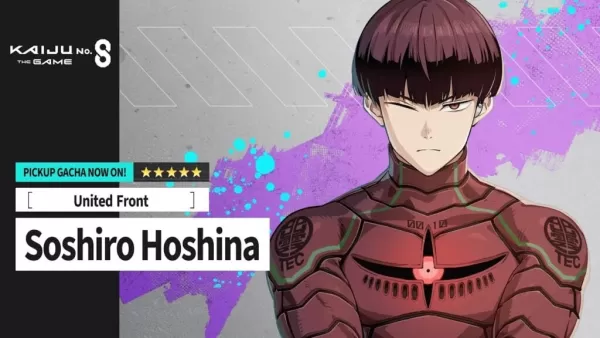
As of now, there is no official announcement confirming that Soshiro Hoshina, the character from Kaiju No. 8, has joined the Kaiju No. 8 mobile game. However, the Kaiju No. 8 mobile game, developed by Bandai Namco, has been expanding its roster of playable characters based on the popular anime and manga series by Naoya Matsumoto. Soshiro Hoshina, known for his role as a Class 1 K-9 (a high-ranking kaiju) and his complex relationship with the protagonist, Kirishima, could be a potential candidate for inclusion due to his popularity and unique abilities. Fans have been speculating about his possible addition, especially given the game’s ongoing updates and new character reveals. For the most accurate and up-to-date information, it’s best to check official sources such as the game’s website, Bandai Namco’s social media channels, or the Kaiju No. 8 anime’s official website. Stay tuned—new character announcements are always possible!
Mar 18,2026
It seems you're referencing a phrase that blends a political or social movement theme—“From... to Unionize”—possibly alluding to a shift in consciousness or collective action, such as moving from passive acceptance to organizing for workers’ rights, social justice, or labor activism. If you're referring to a specific event, song, book, or movement (e.g., "From 'What If' to Unionize" as a slogan, or a piece of art, protest chant, or cultural reference), please clarify so I can provide a more accurate and helpful response. Alternatively, if you're exploring the idea of moving from a state of disengagement or resignation ("from...") to active unionization or collective empowerment, I’d be glad to help you develop a message, slogan, speech, or even a historical or theoretical framework on labor organizing, social movements, or transformative change. Let me know your intent—whether it's for activism, education, creative writing, or analysis—and I’ll tailor the support accordingly.
Mar 16,2026

Homerun Clash 2: Legends Derby has emerged as a standout sequel, surpassing its predecessor with enhanced gameplay, deeper customization, and a nostalgic tribute to baseball’s greatest legends. While the original Homerun Clash captured fans’ imaginations with its fast-paced, arcade-style home run challenges, the sequel elevates the experience by blending authentic player mechanics, dynamic stadiums, and a story-driven mode that brings legendary sluggers to life. Key improvements in Legends Derby include: Expanded Legend Roster: Players can now choose from 50+ iconic MLB legends—like Babe Ruth, Hank Aaron, Barry Bonds, and Shohei Ohtani (in a retro-futuristic fusion)—each with unique stats, signature swings, and cinematic home run animations. Immersive Gameplay Modes: New features like "Time Warp Mode" allow players to battle in different eras (1920s, 1980s, 2020s), complete with period-accurate uniforms, crowd chants, and weather effects. Advanced Physics Engine: The game now simulates wind, humidity, and bat speed with greater realism, making each swing feel impactful and strategic. Custom Derby Creation: Players can design their own dream stadiums, mix and match legendary lineups, and host online tournaments with global rankings. Narrative Campaign: A compelling single-player story follows a young aspiring slugger training under ghostly legends to reclaim the title of "King of the Homerun." Critics and fans alike praise Legends Derby for honoring baseball’s legacy while pushing the boundaries of mobile sports gaming. With its slick visuals, addictive mechanics, and emotional depth, it’s not just a sequel—it’s a home run in its own right. Verdict: Homerun Clash 2: Legends Derby isn’t just better than the original—it’s a landmark title that redefines what sports games can be. If you loved the first game, this is a must-play. If you’re new to the series, you’re in for a grand slam.
Mar 15,2026