by Ryan Dec 01,2025
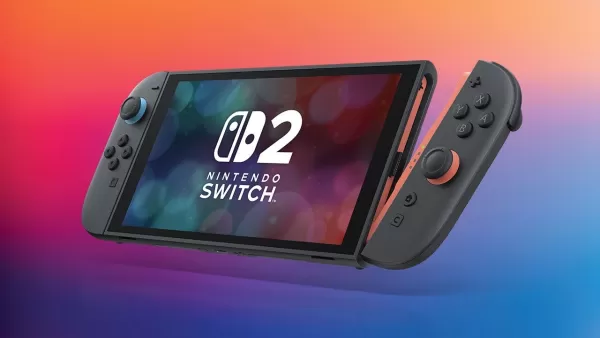
At the beginning of April, Nintendo's highly anticipated Switch 2 Direct presentation concluded on a concerning note. While the event showcased a range of exciting new features and a diverse lineup of upcoming games, one crucial detail was missing—the price. Fans' apprehensions about a significant price increase were quickly validated when Nintendo later announced on the newly launched Switch 2 website that the console would retail for $449, a $150 jump from the original Switch's launch price of $299. Frustration over Nintendo's lack of upfront pricing was coupled with anxiety about the console's potential success, especially following the announcement that Mario Kart World, the Switch 2's flagship launch title, would cost $80.
Some Nintendo fans, still haunted by the Wii U era, immediately voiced pessimism, suggesting the Switch 2's cost would shrink its potential audience and plunge the company into another difficult period. After all, why would anyone pay $450—nearly the same as a PS5 or Xbox Series X—for a console based on what is essentially last-generation technology? These fears were soon alleviated, however, when Bloomberg reported that the Switch 2 is projected to have the biggest console launch in history, with estimates of 6 to 8 million units sold. Such a figure would easily surpass the previous record of 4.5 million units held jointly by the PS4 and PS5. Despite the price, consumer demand for the Switch 2 is clearly intense, and looking at the history of video game console launches, this outcome was almost inevitable.
Ironically, Nintendo's biggest failure reveals some of the reasons why the Switch 2 is poised for success. The Virtual Boy, released two decades ago, was Nintendo's first and only genuine foray into virtual reality. The sci-fi appeal of VR has always been strong, and the technology's current popularity confirms that, but in 1995, even the most advanced VR systems were far from ready for mainstream adoption. And the Virtual Boy was far from advanced. Nintendo made numerous compromises to bring the device to market. The console had to be placed on a table, requiring users to hunch over to peer into the viewfinder, where games were displayed in a harsh red monochrome. There were also widespread reports of the device causing headaches. The technology simply didn't live up to player expectations—it was no Star Trek holodeck capable of transporting you to other worlds. Unsurprisingly, consumers rejected it.
The Switch 2, despite its premium price, is nothing like the Virtual Boy. A more fitting comparison is the Wii, which introduced motion control technology that worked reliably and offered a refreshing new way to play. It redefined game interaction and dramatically broadened the gaming demographic—you were as likely to find a Wii in a retirement community as in a child's bedroom. Thanks to the lasting appeal of the Wii's innovations, motion controls remain a staple of Nintendo consoles to this day, providing the ideal way to play titles like Pikmin and Metroid Prime.
Creating a highly desirable console isn't a feat unique to Nintendo. Sony's PlayStation 2, for instance, could play DVDs in addition to games, making it an essential piece of home entertainment technology in the early 2000s. But when Nintendo succeeds, it does so spectacularly. The core innovation of the original Switch—seamlessly transitioning between handheld and TV modes—worked flawlessly. It blurred the once-distinct line between portable and home consoles, an idea that remains immensely popular today, with most players hoping Nintendo continues this approach. The primary criticism of the original Switch (aside from Joy-Con drift) was its underpowered hardware, and Nintendo is now addressing that limitation with confidence. So while the Switch 2 may not be as groundbreaking as its predecessor, it unquestionably fulfills a clear consumer desire.
The Switch 2's price point is perfectly aligned with what Nintendo's competitors charge for their flagship systems.
However, appealing hardware is only part of the equation. The Wii U, Nintendo's most recent commercial disappointment, serves as another example of unappealing technology, but more importantly, it underscores a critical factor in console failures: a weak game library. The Wii U launched with New Super Mario Bros. U, a safe and iterative entry in a series that had grown stale. It failed to innovate on a formula that Nintendo fans had seen repeatedly since the DS era—this was the fourth New Super Mario Bros. game in just six years—and thus it wasn't compelling enough to drive hardware sales. The same was true for other major Wii U releases. While games like Donkey Kong Country: Tropical Freeze and Super Mario 3D World later found success on the Switch, at their original launch they felt uninspired and offered limited new ideas. People bought a Wii for Wii Sports, a Switch for The Legend of Zelda: Breath of the Wild, and a DS for Super Mario 64 DS. The Wii U, unfortunately, never had that definitive must-have title. This, more than its unusual tablet controller, sealed its fate.
In stark contrast to the Wii U, the Switch 2 not only inherits what might be Nintendo's strongest ever software library from the previous generation, but it also offers players new ways to enjoy these games through visual enhancements and additional content. Furthermore, the Switch 2's launch title, Mario Kart World, isn't just another iteration. It completely overhauls the traditional formula, introducing a Forza Horizon-inspired open-world design that gives players a genuine reason to choose it over their well-used copy of Mario Kart 8 Deluxe. Building on this momentum, a month after the Switch 2's release, Nintendo is launching the first 3D Donkey Kong game since 1999 (which, adding to the excitement, appears to draw inspiration from the beloved Super Mario Odyssey). Then, in 2026, an exclusive title from FromSoftware will arrive, one that intriguingly bears some resemblance to Bloodborne. Nintendo has provided multiple compelling reasons for players not to sit out this generation.
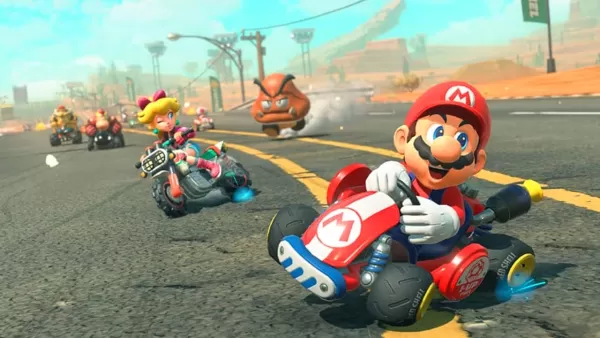
Price will always influence an individual's decision to purchase a console, and it's fair to call the Switch 2 an expensive luxury, particularly in a challenging global economy. However, the Switch 2's pricing is perfectly in line with what Nintendo's competitors charge for their flagship systems. The standard disc-based PS5 matches the $499 price of the Switch 2's Mario Kart World bundle, and the Xbox Series X is similarly priced. While one could argue that the Switch 2's less powerful hardware should place it closer to the Xbox Series S (currently $380), it's important to consider Nintendo's unique value proposition—the Switch 2's worth isn't solely based on raw performance.
The most prominent example of a console being so expensive it harmed its own sales is the PS3. The third PlayStation generation launched at $499 for the 20GB model and $600 for the 60GB version ($790 and $950 when adjusted for inflation). In 2006, there was no precedent for such high console prices, and players initially gravitated toward the more affordable Xbox 360. Here in 2025, while the Switch 2 is certainly costly, its price is not without precedent. In fact, it's now the standard for high-end video game hardware.
Nintendo's distinctive position in the gaming industry stems from its ability to create genre-defining games that people are eager to pay a premium to experience. However, compared to the competition, you aren't actually paying a premium for the Switch 2—it's priced competitively within the industry. It may not match the PS5's power, but it remains a piece of technology that people actively want, and it will be supported by a library of highly desired games. There is certainly a limit to what consumers will pay, and if the price of Nintendo's games continues to climb, the company may eventually reach that threshold. For now, though, Nintendo is merely meeting the price benchmark established by its rivals. And with over 75 million PlayStation 5 units sold to date, it's clear that this is a price point many are willing to accept.
Zenless Zone Zero Update Cycle Leak Hints at Future Content cadence
All Mavuika Materials, Kit, and Constellations in Genshin Impact
Counterfeit Bank Simulator: Minting Solution for Economic Crises
Marvel Rivals: Season 1 Dracula Explained
Albion Online launches Paths to Glory update with new content, boosted spawn rates, and more
Roblox: Anime Auras RNG Codes (January 2025)
Best Xbox Game Pass Games For Kids (January 2025)
Solo Leveling: Global Tournament Draws Near
Games Workshop NDA Sparks Henry Cavill 40K Film Speculation
Mar 07,2026
FMA Brotherhood Collab Part 2 Adds Alphonse, Riza to Soul Strike
Mar 02,2026
Safari Ball Debuts at Pokémon GO's Wild Area Event 2024
Feb 24,2026
Pirate Yakuza in Hawaii Edition Details Unveiled
Feb 21,2026
Donkey Kong Direct: Key Announcements Recap
Feb 21,2026
 Category